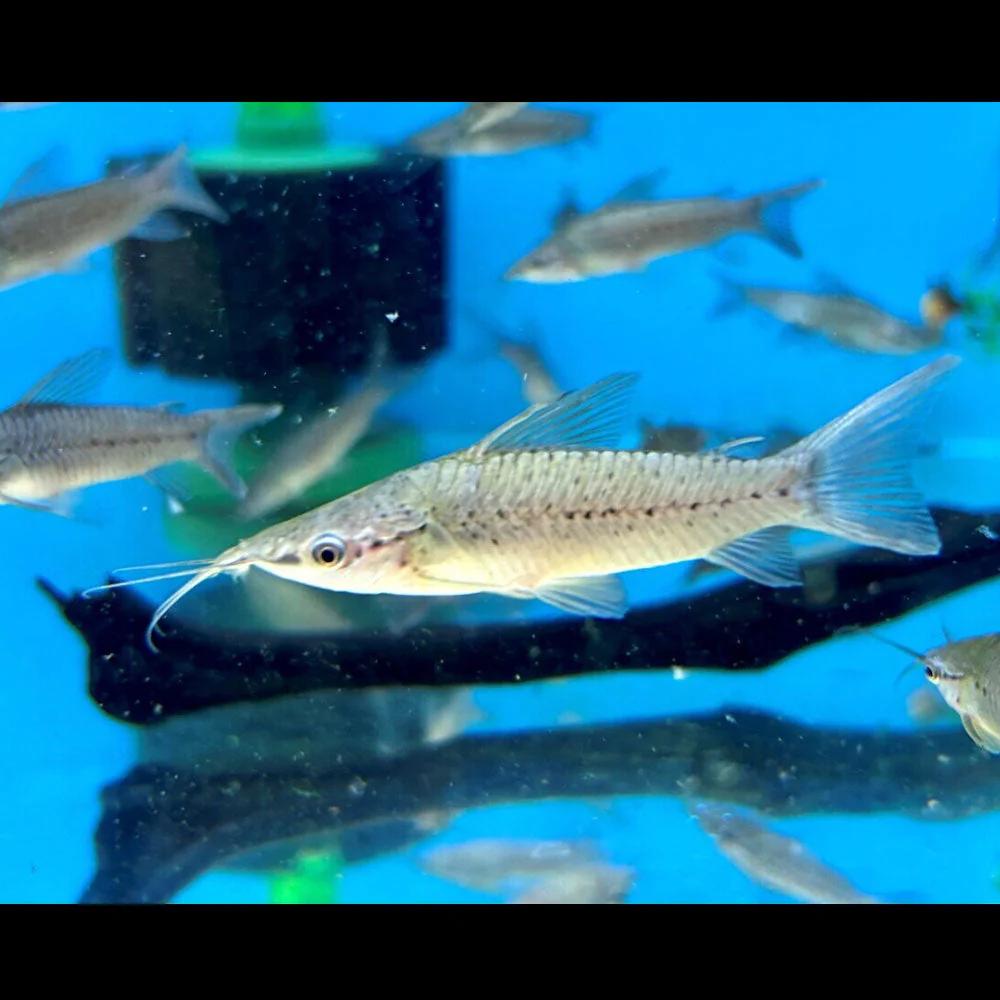
Porthole Catfish (Dianema longibarbis)
Porthole Catfish (Dianema longibarbis) is a freshwater fish species belonging to the Loricariidae family. It is commonly found in the Amazon River basin in South America.
-
Temperature: Porthole Catfish prefer water temperatures ranging from 72°F to 79°F (22°C to 26°C). Maintaining stable water temperatures within this range is essential for their well-being.
-
Minimum Size Tank: It is recommended to house Porthole Catfish in tanks that are at least 30 gallons (113 liters) or larger. Providing ample space and suitable hiding spots is crucial for their overall health and behavior.
Feeding Habits: Porthole Catfish are omnivorous and primarily feed on algae, plant matter, and small insects or invertebrates. In a home aquarium, they can be fed a varied diet consisting of sinking pellets, algae wafers, and occasional live or frozen foods such as bloodworms or brine shrimp.
Habitat Preference: In their natural habitat, Porthole Catfish inhabit slow-moving rivers and streams, where they often reside among submerged roots and vegetation. They prefer areas with plenty of hiding spots and ample access to algae and other food sources.
Water pH Level: Porthole Catfish thrive in slightly acidic to neutral water conditions, with a pH range between 6.0 and 7.5. It is important to maintain stable water parameters within this range to ensure their optimal health.
Behavior: Porthole Catfish are peaceful and generally non-aggressive. They are known to be active during the daytime, spending much of their time foraging for food along the bottom of the tank. They are generally compatible with other peaceful fish species that share similar water requirements.
Porthole Catfish are known to exhibit shoaling behavior, preferring the company of their own species or similar bottom-dwelling fish. Keeping them in small groups of three or more can help them feel more secure and exhibit their natural social behaviors.
Color and Other Details: Porthole Catfish are known for their unique appearance, characterized by their brownish coloration and distinctive "porthole" spots on their bodies. These spots resemble small windows, giving them their common name. They have a flattened body shape with an elongated snout and prominent barbels around their mouths, which they use to locate food along the substrate.
Product Information
Product Information
Shipping & Returns
Shipping & Returns
Description
Porthole Catfish (Dianema longibarbis) is a freshwater fish species belonging to the Loricariidae family. It is commonly found in the Amazon River basin in South America.
-
Temperature: Porthole Catfish prefer water temperatures ranging from 72°F to 79°F (22°C to 26°C). Maintaining stable water temperatures within this range is essential for their well-being.
-
Minimum Size Tank: It is recommended to house Porthole Catfish in tanks that are at least 30 gallons (113 liters) or larger. Providing ample space and suitable hiding spots is crucial for their overall health and behavior.
Feeding Habits: Porthole Catfish are omnivorous and primarily feed on algae, plant matter, and small insects or invertebrates. In a home aquarium, they can be fed a varied diet consisting of sinking pellets, algae wafers, and occasional live or frozen foods such as bloodworms or brine shrimp.
Habitat Preference: In their natural habitat, Porthole Catfish inhabit slow-moving rivers and streams, where they often reside among submerged roots and vegetation. They prefer areas with plenty of hiding spots and ample access to algae and other food sources.
Water pH Level: Porthole Catfish thrive in slightly acidic to neutral water conditions, with a pH range between 6.0 and 7.5. It is important to maintain stable water parameters within this range to ensure their optimal health.
Behavior: Porthole Catfish are peaceful and generally non-aggressive. They are known to be active during the daytime, spending much of their time foraging for food along the bottom of the tank. They are generally compatible with other peaceful fish species that share similar water requirements.
Porthole Catfish are known to exhibit shoaling behavior, preferring the company of their own species or similar bottom-dwelling fish. Keeping them in small groups of three or more can help them feel more secure and exhibit their natural social behaviors.
Color and Other Details: Porthole Catfish are known for their unique appearance, characterized by their brownish coloration and distinctive "porthole" spots on their bodies. These spots resemble small windows, giving them their common name. They have a flattened body shape with an elongated snout and prominent barbels around their mouths, which they use to locate food along the substrate.