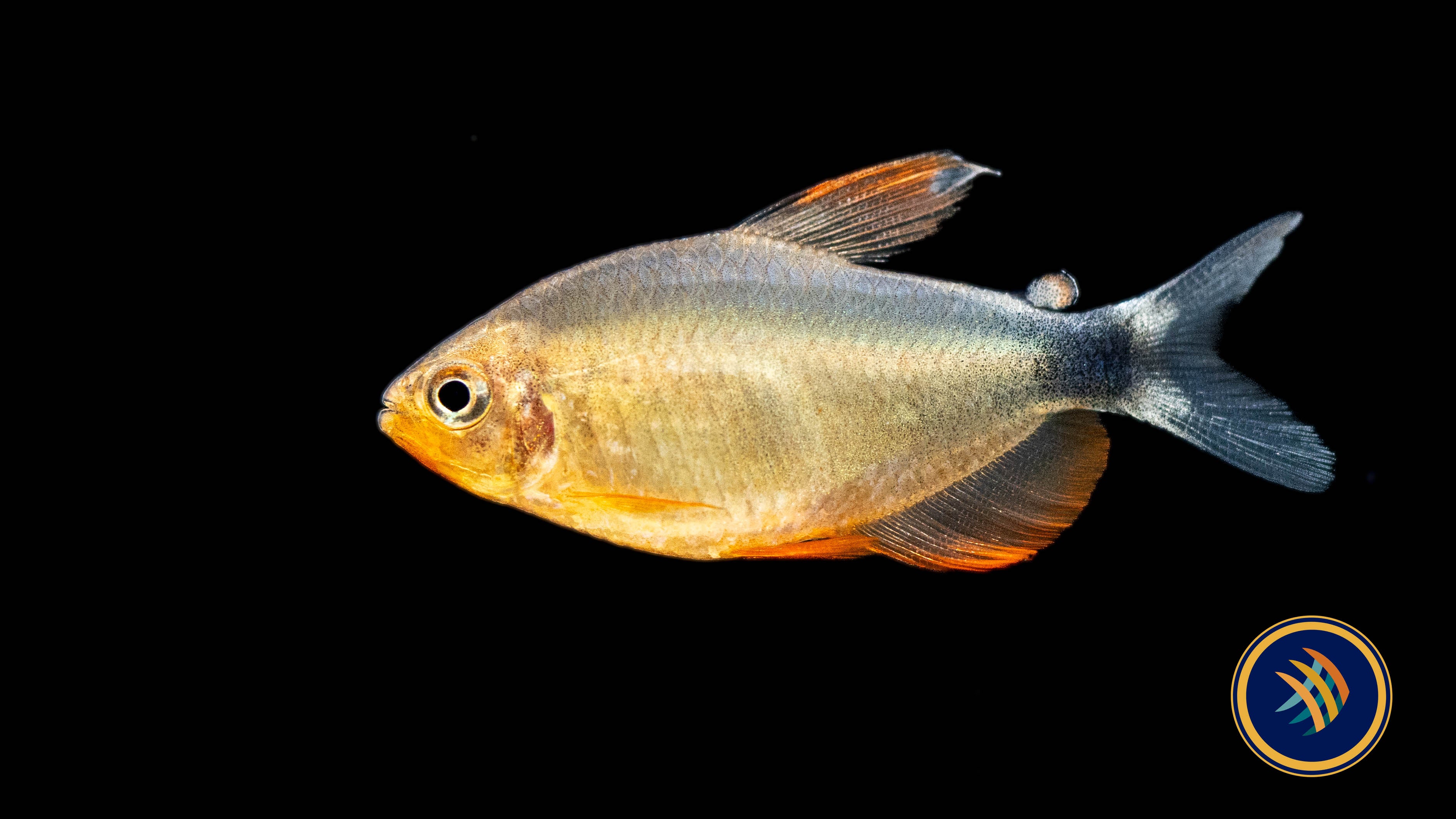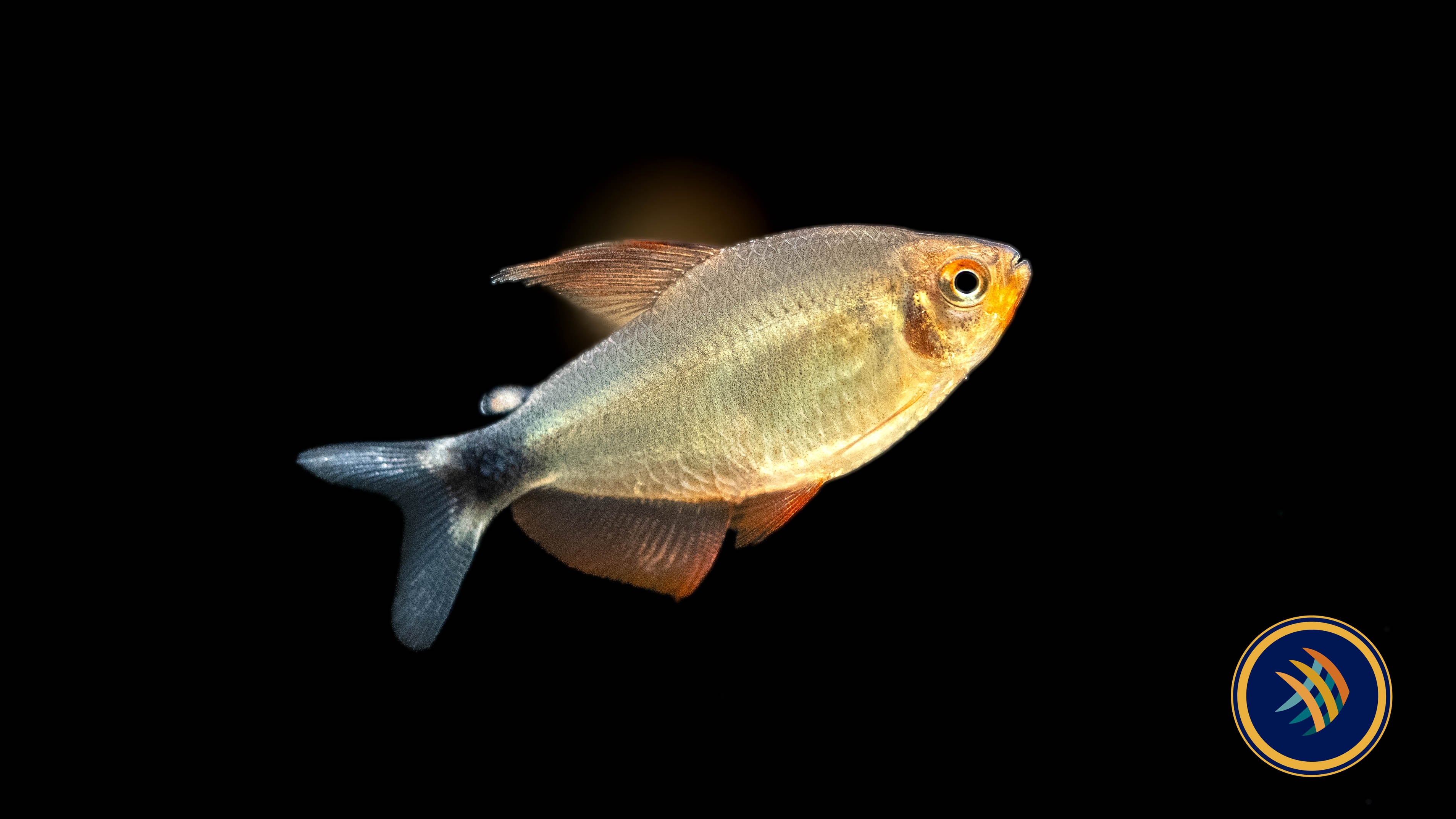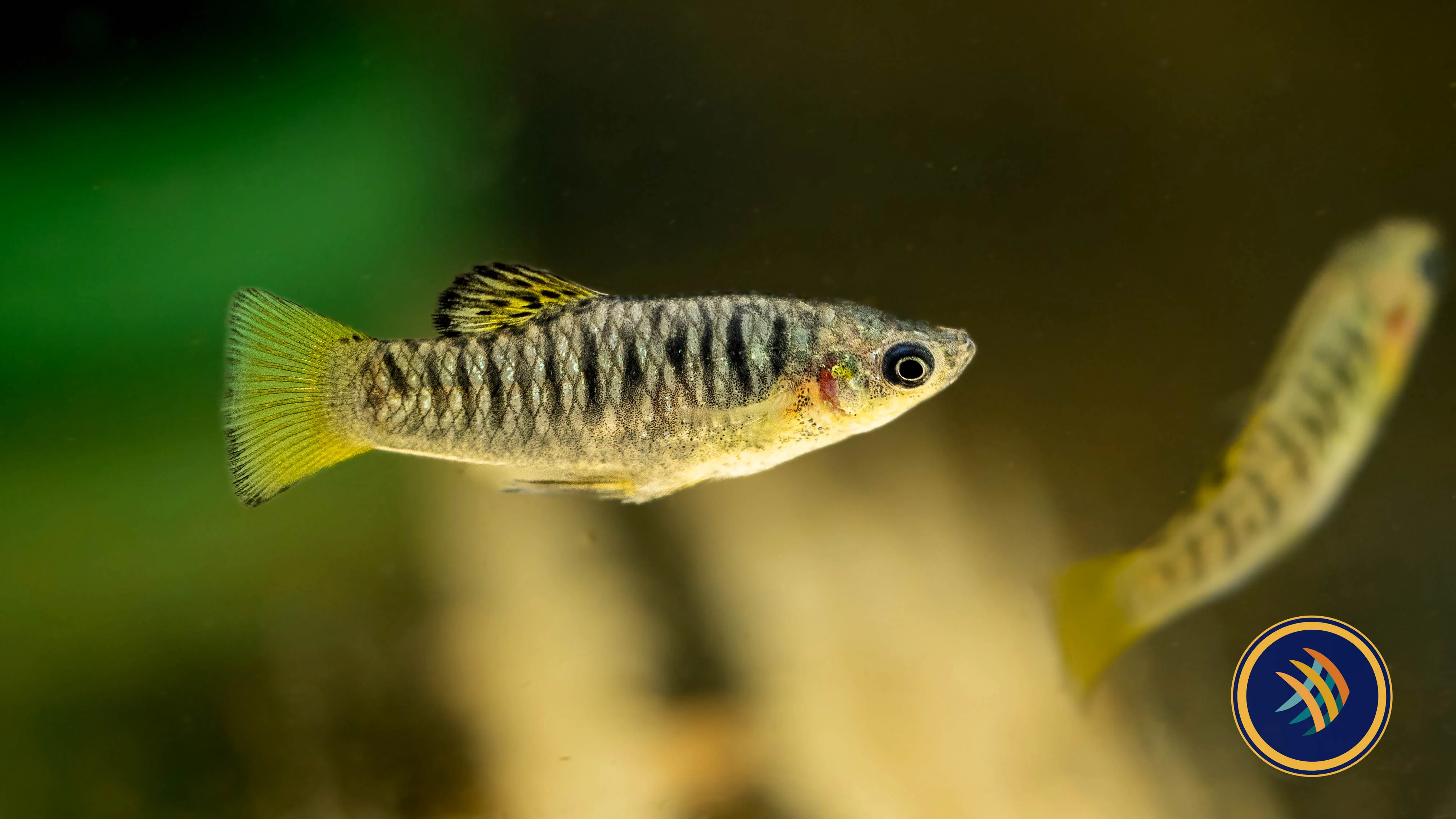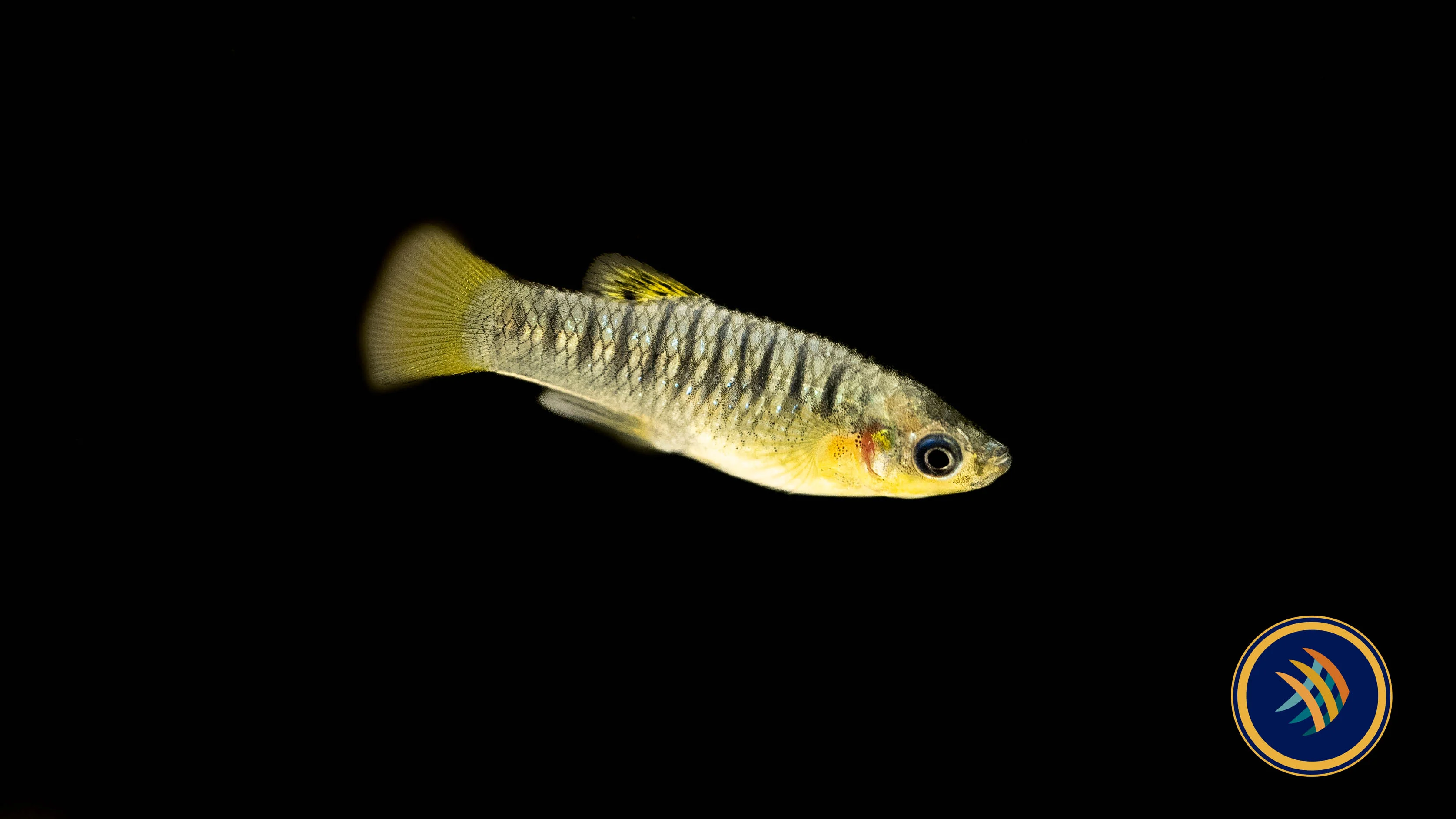
African Leaf Fish (Polycentropsis abbreviata) 3-5cm Aquarium Glaser
African Leaf Fish / African Leaffish
Polycentropsis abbreviata is one of the most unusual African predatory freshwater fish available to aquarists. It’s famous for its extreme camouflage, ambush‑hunting behavior, and ancient evolutionary lineage.
Identification & Taxonomy
- Scientific name: Polycentropsis abbreviata
- Common names: African Leaf Fish, African Leaffish, Shortfin African Leaffish
- Family: Polycentridae (historically placed in Nandidae; classification revised by modern phylogenetics)
- Described by: George A. Boulenger, 1901
- Genus: Polycentropsis (monotypic: this is the only species)
Natural Distribution & Habitat
- Range: West and Central Africa
- Countries: Benin, Nigeria, Cameroon, Gabon (river systems including Niger, Ogowe, Komo, Wouri)
-
Habitat type:
- Slow‑moving forest streams
- Swamps and shaded creeks
- Blackwater to amber‑stained waters
- Heavy leaf litter, submerged roots, dense vegetation
Water in the wild is typically soft, acidic, tannin‑rich, and dimly lit.
Evolutionary Significance
P. abbreviata is considered an ancient Gondwanan lineage, closely related to the South American leaf fish Polycentrus schomburgkii. Their shared body plan likely predates the breakup of Gondwana over 100 million years ago.
Appearance & Behavior
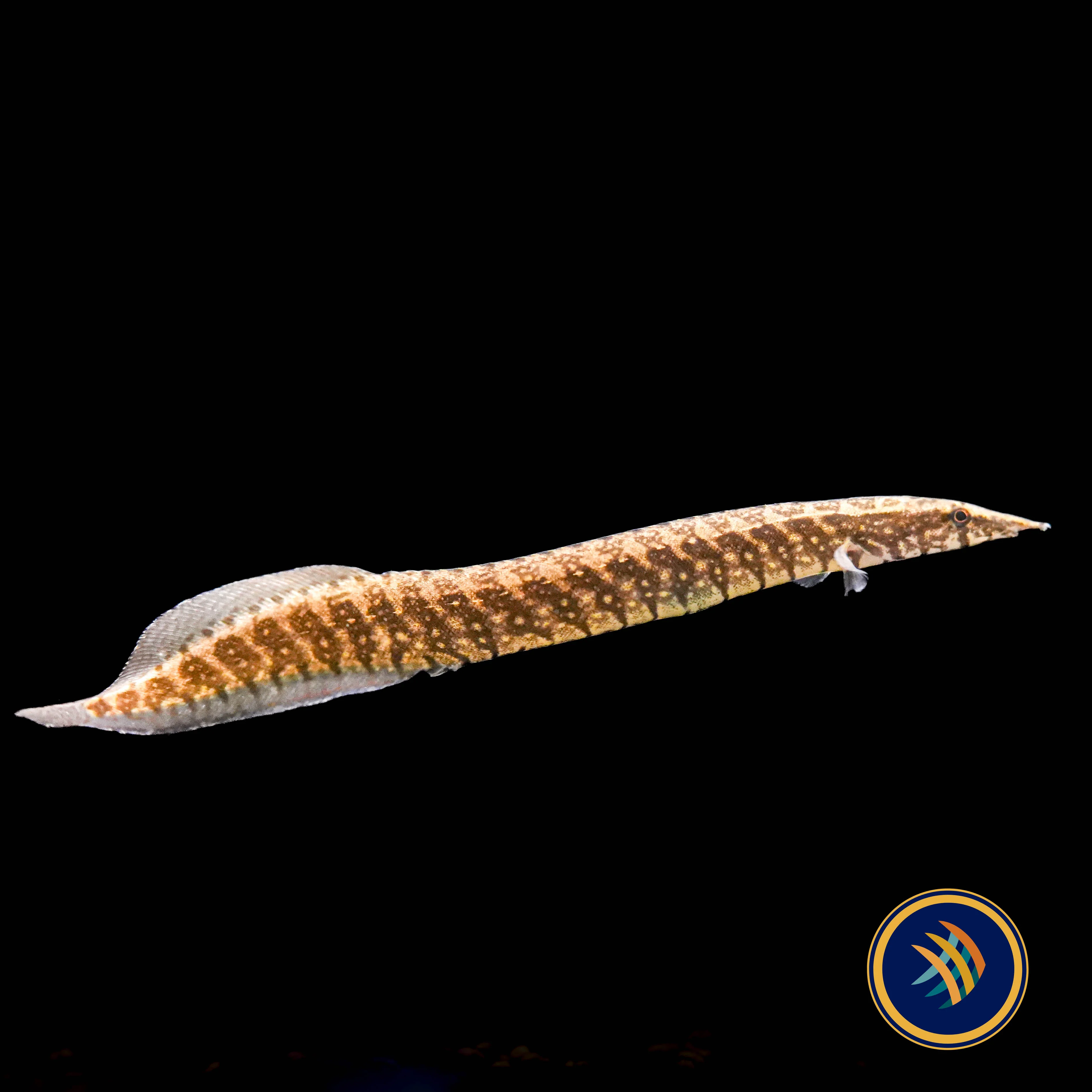
- Adult size: 6–8 cm (≈3 in)
- Body: Laterally compressed, leaf‑shaped
- Coloration: Brown, tan, olive, or marbled; capable of rapid color change
-
Distinct features:
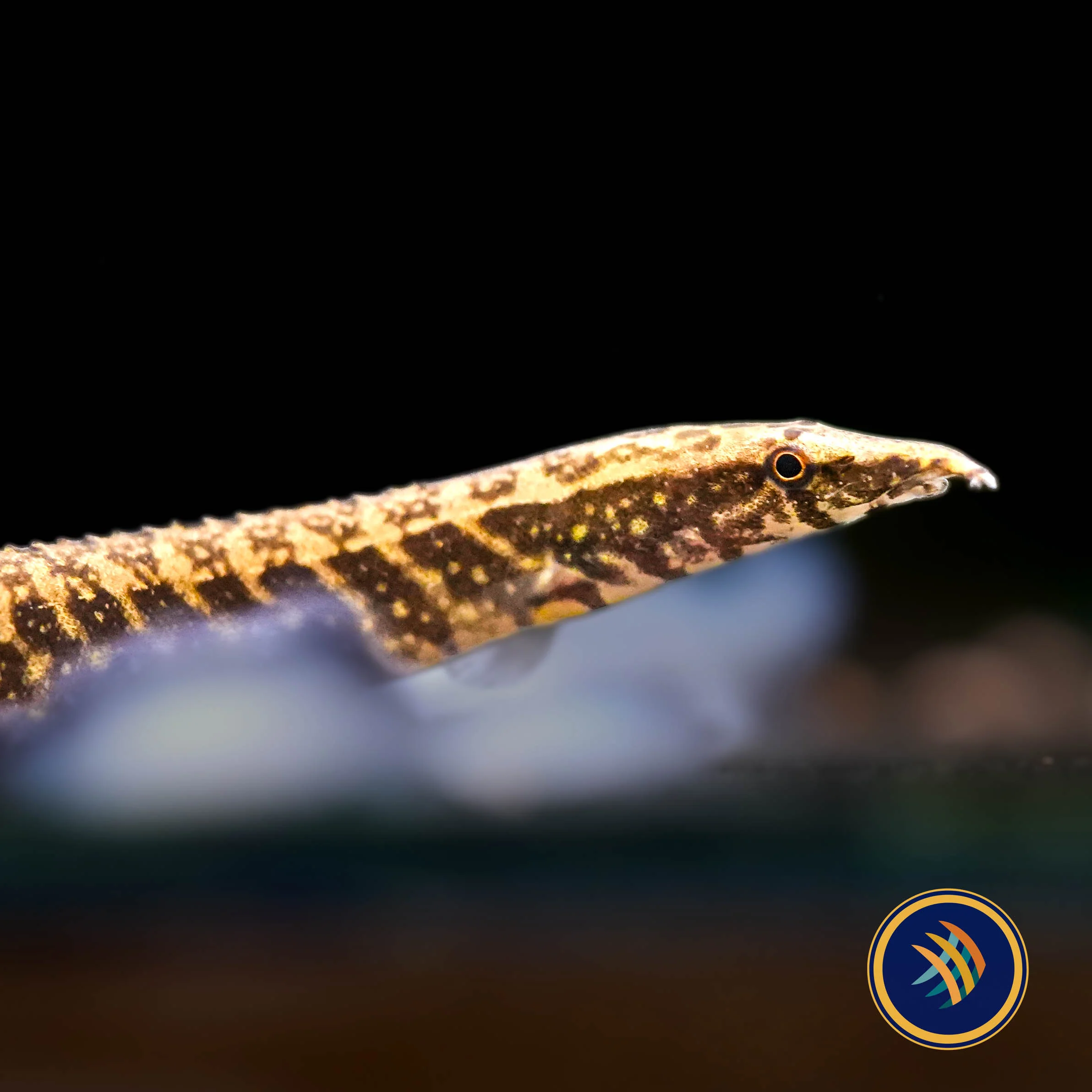
- Large, upward‑set eyes
- Huge protrusible mouth
- Leaf‑like dorsal and anal fins
-
Behavior:
- Extremely sedentary
- Ambush predator
- Drifts like a dead leaf before striking prey
Even juveniles show dramatic black‑and‑white patterning, shifting to cryptic browns as they mature.
Aquarium Care Overview
Difficulty: Intermediate → Advanced
Best kept: Species tank or specialist community
Tank Requirements
- Minimum tank: 30–40 gallons (larger recommended despite small size)
-
Layout:
- Dense planting at sides and back
- Open central ambush zone
- Driftwood, roots, leaf litter
- Floating plants for shade
- Lighting: Low to moderate
- Flow: Very gentle
Crowded or brightly lit tanks cause chronic stress and decline.
Water Parameters (Ideal)
| Parameter | Range |
|---|---|
| Temperature | 24–28 °C (75–82 °F) |
| pH | 6.0–6.8 |
| Hardness | Soft (≤10 dGH) |
| Flow | Low |
| Tannins | Beneficial |
Stable conditions matter more than hitting exact numbers.
Diet
Obligate carnivore
- Live foods preferred:
- Small fish
- Earthworms
- White mosquito larvae
- Large daphnia
- Some individuals adapt to frozen foods, but many refuse non‑moving prey
This species hunts based on motion, not smell.
Tankmates (Caution!)
- Not safe with small fish or shrimp
- Suitable only with:
- Robust, deep‑bodied fish
- Species that won’t fit in its mouth
- Often best kept alone or as a pair
“Peaceful” in temperament, but highly predatory.
Breeding (Rare but Fascinating)
- Male builds a bubble‑nest under broad plant leaves
- Eggs are guarded by the male
- Fry hatch in ~2–5 days depending on temperature
- Captive breeding is uncommon but documented
Lifespan
- 9–12 years in well‑maintained aquariums
Original: $29.09
-65%$29.09
$10.18Product Information
Product Information
Shipping & Returns
Shipping & Returns
Description
African Leaf Fish / African Leaffish
Polycentropsis abbreviata is one of the most unusual African predatory freshwater fish available to aquarists. It’s famous for its extreme camouflage, ambush‑hunting behavior, and ancient evolutionary lineage.
Identification & Taxonomy
- Scientific name: Polycentropsis abbreviata
- Common names: African Leaf Fish, African Leaffish, Shortfin African Leaffish
- Family: Polycentridae (historically placed in Nandidae; classification revised by modern phylogenetics)
- Described by: George A. Boulenger, 1901
- Genus: Polycentropsis (monotypic: this is the only species)
Natural Distribution & Habitat
- Range: West and Central Africa
- Countries: Benin, Nigeria, Cameroon, Gabon (river systems including Niger, Ogowe, Komo, Wouri)
-
Habitat type:
- Slow‑moving forest streams
- Swamps and shaded creeks
- Blackwater to amber‑stained waters
- Heavy leaf litter, submerged roots, dense vegetation
Water in the wild is typically soft, acidic, tannin‑rich, and dimly lit.
Evolutionary Significance
P. abbreviata is considered an ancient Gondwanan lineage, closely related to the South American leaf fish Polycentrus schomburgkii. Their shared body plan likely predates the breakup of Gondwana over 100 million years ago.
Appearance & Behavior
- Adult size: 6–8 cm (≈3 in)
- Body: Laterally compressed, leaf‑shaped
- Coloration: Brown, tan, olive, or marbled; capable of rapid color change
-
Distinct features:
- Large, upward‑set eyes
- Huge protrusible mouth
- Leaf‑like dorsal and anal fins
-
Behavior:
- Extremely sedentary
- Ambush predator
- Drifts like a dead leaf before striking prey
Even juveniles show dramatic black‑and‑white patterning, shifting to cryptic browns as they mature.
Aquarium Care Overview
Difficulty: Intermediate → Advanced
Best kept: Species tank or specialist community
Tank Requirements
- Minimum tank: 30–40 gallons (larger recommended despite small size)
-
Layout:
- Dense planting at sides and back
- Open central ambush zone
- Driftwood, roots, leaf litter
- Floating plants for shade
- Lighting: Low to moderate
- Flow: Very gentle
Crowded or brightly lit tanks cause chronic stress and decline.
Water Parameters (Ideal)
| Parameter | Range |
|---|---|
| Temperature | 24–28 °C (75–82 °F) |
| pH | 6.0–6.8 |
| Hardness | Soft (≤10 dGH) |
| Flow | Low |
| Tannins | Beneficial |
Stable conditions matter more than hitting exact numbers.
Diet
Obligate carnivore
- Live foods preferred:
- Small fish
- Earthworms
- White mosquito larvae
- Large daphnia
- Some individuals adapt to frozen foods, but many refuse non‑moving prey
This species hunts based on motion, not smell.
Tankmates (Caution!)
- Not safe with small fish or shrimp
- Suitable only with:
- Robust, deep‑bodied fish
- Species that won’t fit in its mouth
- Often best kept alone or as a pair
“Peaceful” in temperament, but highly predatory.
Breeding (Rare but Fascinating)
- Male builds a bubble‑nest under broad plant leaves
- Eggs are guarded by the male
- Fry hatch in ~2–5 days depending on temperature
- Captive breeding is uncommon but documented
Lifespan
- 9–12 years in well‑maintained aquariums